


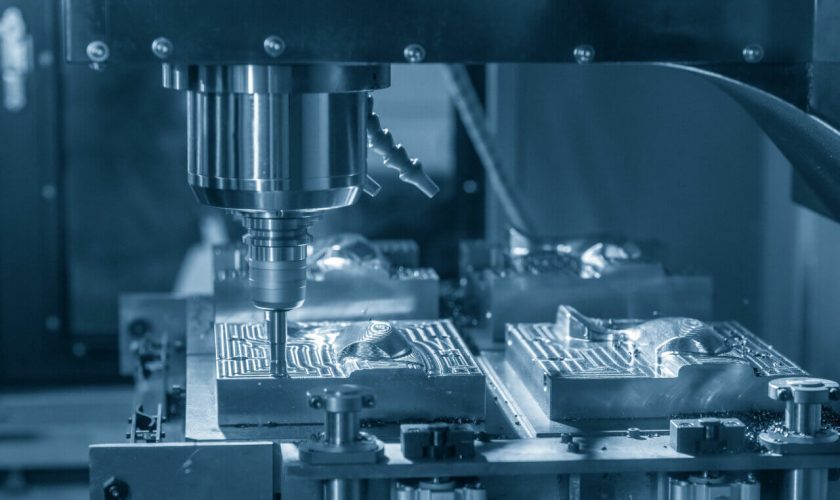
Modern manufacturing demands versatility, strength, and flawless accuracy. As industries continue to push engineering limits, the need for large format CNC machining and high-level precision machining has never been greater. From oversized structural components to highly detailed mechanical parts, advanced machining solutions allow manufacturers to produce complex components efficiently and consistently.
The Growing Importance of Large Format Machining
When dealing with oversized components, traditional machining equipment often falls short. This is where large format machining becomes essential. Large-capacity CNC systems are designed to handle substantial workpieces without sacrificing tight tolerances or structural integrity.
Industries such as aerospace, heavy equipment manufacturing, energy, and industrial automation frequently require machining of large frames, bases, housings, and structural assemblies. With advanced large format CNC machining, manufacturers can maintain dimensional stability across extended spans while minimizing distortion and vibration.
Key advantages of large format capabilities include:
• Machining oversized components in a single setup
• Improved structural rigidity and dimensional consistency
• Reduced need for part segmentation and reassembly
• Enhanced efficiency for heavy-duty applications
By eliminating unnecessary segmentation, manufacturers reduce assembly time and avoid alignment errors, ensuring the finished product performs as intended.
Precision Machining at Every Scale
Size does not compromise accuracy. Whether working on small intricate parts or large structural elements, precision machining ensures every component meets strict tolerances and performance specifications.
Modern CNC equipment uses advanced motion control systems, high-speed spindles, and digital calibration tools to deliver exceptional consistency. Precision CNC machining plays a critical role in applications where even microscopic deviations can impact safety or functionality.
Examples include:
• Aerospace structural components
• High-performance automotive parts
• Medical device housings
• Industrial tooling and molds
• Energy sector mechanical systems
In each of these industries, repeatability and reliability are vital. The ability to replicate complex designs with consistent results gives manufacturers a competitive advantage.
Combining Large Format CNC Machining with Multi-Axis Technology
While large format CNC machining handles scale, advanced multi-axis systems enhance flexibility. Integrating multi-axis machining with large-capacity equipment allows manufacturers to process complex geometries on oversized components without multiple setups.
Although 5-axis CNC machining services are often associated with smaller intricate parts, they are equally valuable when applied to larger components. Multi-axis movement enables:
• Machining of angled surfaces and compound curves
• Reduced repositioning and manual adjustments
• Improved surface finish and dimensional accuracy
• Shorter overall production cycles
The combination of scale and precision provides a powerful manufacturing solution capable of meeting modern engineering challenges.
Engineering-Driven Manufacturing
Successful machining projects begin with thorough planning. Advanced CAD/CAM programming ensures tool paths are optimized for efficiency and material conservation. Simulation software helps prevent collisions, reduce waste, and streamline operations before machining begins.
With a focus on precision CNC machining, engineers can evaluate structural integrity, thermal expansion factors, and material characteristics. This proactive approach improves product performance while reducing manufacturing risks.
Applications Across High-Demand Industries
Large format machining and precision machining serve a wide range of industries:
Aerospace manufacturers depend on accurate, lightweight structural components that meet strict regulatory standards.
Energy companies require durable parts capable of withstanding high pressures and extreme environments.
Heavy equipment manufacturers rely on large structural bases and frames machined with absolute consistency.
Automotive innovators demand precision-engineered components for performance and reliability.
In every case, machining capabilities must align with industry-specific certifications and quality requirements.
Quality Control and Consistency
Maintaining quality across both small and large components requires advanced inspection technology. Coordinate measuring machines (CMM), digital probing systems, and laser scanning tools verify every dimension.
The commitment to precision machining extends beyond production—it includes inspection, documentation, and continuous process improvement. Quality assurance ensures that each part meets its intended design criteria and performs reliably under operational conditions.
Scalability and Custom Solutions
Manufacturers today must be agile. From one-off prototypes to full-scale production runs, scalable workflows allow companies to adapt quickly. Large format CNC machining facilities provide the flexibility needed to manage custom projects while maintaining efficiency.
Customization is particularly important for industries requiring specialized parts or unique structural assemblies. By leveraging both large-scale equipment and high-accuracy processes, manufacturers deliver tailored solutions without compromising performance.
Driving Innovation Through Advanced Machining
The future of manufacturing depends on innovation, automation, and integrated technology. Digital monitoring systems, real-time process feedback, and smart factory integration enhance both speed and reliability.
By prioritizing large format CNC machining, advanced precision CNC machining, and multi-axis capabilities, manufacturers position themselves to handle increasingly complex engineering demands. The synergy between scale and accuracy ensures that components—regardless of size—meet the highest standards of quality and durability.
In a competitive industrial landscape, dependable precision machining and scalable large-format capabilities are more than technical assets—they are strategic advantages that support long-term growth and operational excellence.