


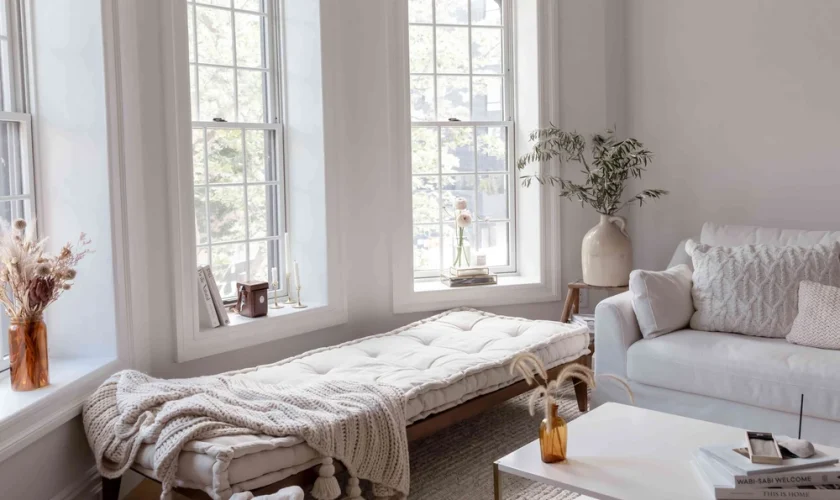
Wabi-sabi is one of those concepts that resists clean translation precisely because it describes something that Western aesthetics don’t have a direct equivalent for. The closest approximation is the beauty of imperfection and impermanence – the worn edge of a wooden table, the uneven glaze of a handmade bowl, the crack repaired with gold in the kintsugi tradition. It is an aesthetic that finds value in what is old, imperfect, and quietly present rather than in what is new, flawless, and impressive.
Understanding wabi-sabi doesn’t require deep study of Japanese philosophy. It requires a shift in what you notice and what you consider worth keeping.
Where Wabi-Sabi Comes From
The concept has roots in Zen Buddhism and developed as a counterpoint to the ornate and gilded aesthetics of aristocratic Japanese culture in the fifteenth and sixteenth centuries. The tea master Sen no Rikyu is closely associated with its formalization – he developed the wabi tea ceremony, using rough, irregular ceramics and simple earthen tea rooms rather than the polished lacquerware and formal spaces of elite tea culture.
The underlying philosophy holds that nothing is permanent, nothing is perfect, and nothing is complete – and that these qualities, rather than being deficiencies, are the conditions that make beauty possible. A perfectly symmetrical, flawless object has nowhere to go. An object that shows its age, carries evidence of how it was made, and wears its imperfections openly has a life that perfect objects lack.
Travelers who have spent time in Japan – particularly those who have visited traditional craft towns, old temple gardens, or the wooden interior spaces of historic inns on a Japan cruise itinerary – often recognize wabi-sabi before they have a name for it. It’s what makes a mossy stone path feel more beautiful than a clean concrete one, and an old iron teapot feel more satisfying to hold than a new one.
What Wabi-Sabi Is Not
It’s worth separating wabi-sabi from a few things it’s frequently confused with. It isn’t minimalism, though the two overlap. Minimalism is about reduction – removing things until only the essential remains. Wabi-sabi isn’t concerned with quantity. A space can have many objects and be deeply wabi-sabi; a sparse space can feel cold and sterile rather than quietly beautiful.
It also isn’t rusticity or deliberate roughness for its own sake. Buying something distressed or artificially aged to suggest wabi-sabi misses the point entirely. The quality it recognizes develops through actual use, actual time, and actual engagement with the world – it can’t be manufactured.
And it isn’t neglect dressed up as philosophy. A crumbling wall that’s never been maintained isn’t wabi-sabi. A wall that has aged gracefully, that shows the history of the building in its texture, that has been cared for without being restored to newness – that’s closer to what the aesthetic describes.
Applying It at Home
Bringing wabi-sabi into a living space is less about purchasing particular objects than about developing a different relationship with what you already have and what you choose to keep.
The most accessible entry point is ceramics. Handmade pottery – bowls, cups, and plates made by individual potters rather than manufactured uniformly – carries exactly the kind of imperfection and individuality that wabi-sabi values. The slight asymmetry of a thrown bowl, the variation in a glaze that pooled differently on each piece, the fingerprint visible in the clay – these are qualities that mass production eliminates and that handcraft preserves. Using these objects daily rather than displaying them gives them the additional quality of wear that accumulates into character over time.
Natural materials age in ways that synthetic ones don’t, and this is central to how wabi-sabi manifests in interiors. Wood that develops a patina through use rather than being refinished to remove it. Linen that softens and wrinkles rather than staying crisp. Stone that shows the marks of water and time. Choosing these materials and allowing them to change rather than maintaining them at a fixed state of newness is a practical expression of the philosophy.
Plants – particularly ones that are asymmetric, seasonal, and imperfect in their arrangement – bring the quality of natural impermanence into a space more directly than almost anything else. The Japanese concept of ikebana, flower arranging, is built around using negative space and natural form rather than creating symmetrical abundance. Even without formal training, applying that sensibility – one branch rather than a vase full, an arrangement that follows the plant’s natural direction rather than correcting it – produces results that feel different from conventional floral decoration.
The Deeper Shift
The most significant thing wabi-sabi offers isn’t a design approach but a reorientation toward what has value. In a material culture that prizes newness, flawlessness, and uniformity, it suggests that the things most worth keeping are the ones that carry evidence of time and use – that have become more themselves through wear rather than less.
Applied to objects, this means repairing rather than replacing, keeping rather than upgrading, and noticing what an old thing offers that a new one can’t. Applied more broadly, it’s a way of paying attention that finds more worth attending to than the standard Western aesthetic usually allows.
That shift doesn’t require Japan, a tea ceremony, or any particular object. It requires only a willingness to look differently at what’s already there.