

แทงบอลออนไลน์
September 19, 2026 - Wam Times

September 19, 2026

Auto

Why Iowa Is One of America’s Busiest Commercial Trucking States

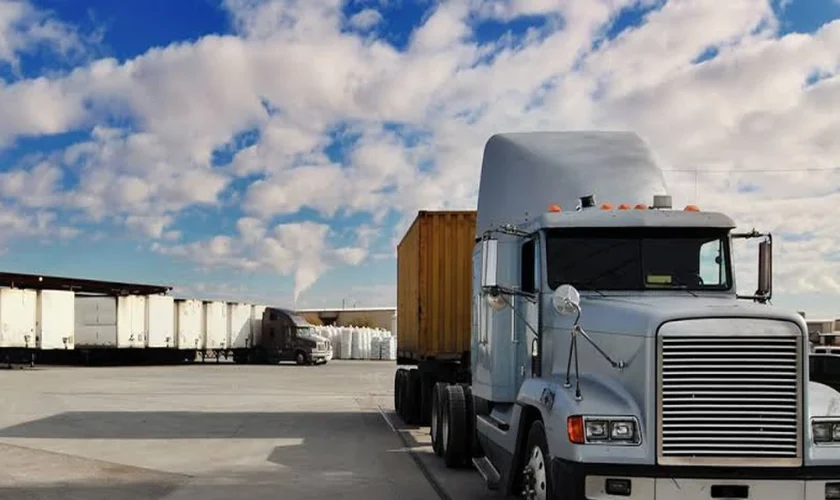
Most people picture cornfields when they think of Iowa. Trucking industry insiders picture something else entirely: one of the most strategically positioned freight corridors in the country, a state where agriculture, manufacturing, and east-west commerce collide on a highway system that never really sleeps. Iowa isn’t just a pass-through state. It’s a load-bearing pillar of American freight, and the numbers make that hard to argue.

Iowa’s Freight Volume Is Staggering

The scale of goods moving across Iowa’s roads surprises a lot of people outside the industry. In 2022, Iowa’s freight system moved 638 million tons of freight, valued at $377 billion. That’s not a misprint. To put it in context, that’s more freight value than the entire GDP of many mid-sized countries, flowing through a state with a population of just over 3 million people.

Iowa has a diverse economy made up of many service and freight-dependent industries, though agriculture-related products dominate the state’s imports and exports, including corn, products made from corn, farm machinery, meat, and animal health products. Nearly all of it depends on commercial trucks to get from point A to point B.

That dependence on trucking isn’t incidental. It reflects geography, infrastructure investment, and decades of supply chain development. Iowa sits at a crossroads that makes it almost impossible to route major national freight without touching it.

Nationally, freight delivery is expected to increase rapidly due to economic growth, increasing demand, changing business and retail models, and a significantly increased reliance on e-commerce, according to TRIP’s 2023 freight analysis. Iowa will absorb a disproportionate share of that growth, given its position in the national network. You can read the full TRIP report on Iowa freight trends at tripnet.org, where the organization published its findings in December 2023.

The I-80 Factor: America’s Freight Spine Runs Through Iowa

No conversation about Iowa trucking is complete without Interstate 80. Iowa sits at the center of several major national freight routes, making it a key logistics hub in the Midwest. Interstate 80 connects the West Coast to Chicago and the East Coast distribution network, which means thousands of long-haul trucks cross Iowa daily.

That volume comes with real consequences on the road. In the 11.2-mile stretch between Iowa City and West Branch alone, average daily traffic volumes reach up to 35,000 vehicles per day, 35 percent of which is large truck traffic. That’s a lot of 80,000-pound rigs sharing lanes with passenger cars, minivans, and motorcycles on a single rural stretch of highway.

Iowa identifies I-80 as a high-volume truck route, which carries regulatory implications for carriers, shippers, and anyone operating in the freight space. State and federal enforcement activity concentrates there precisely because the risk profile concentrates there. For communities like Mount Pleasant and the surrounding Henry County region, proximity to major freight arteries means commercial vehicle traffic is a daily reality, not an occasional one.

“Interstate 80 in Iowa is vital to the state and national economy, providing the infrastructure to move people and goods across Iowa and throughout the nation.” – Iowa Department of Transportation, I-80 Truck Accommodations Planning Study

Driver Fatigue and the Regulatory Framework Behind It

Driving a loaded semi across Iowa sounds straightforward until you factor in the pressure commercial drivers operate under. Tight delivery windows, slim margins, and fierce competition between carriers create conditions where drivers push their physical limits. Federal rules exist to push back against that.

The Federal Motor Carrier Safety Administration has set strict caps on how long a commercial driver can stay behind the wheel. The core rule limits a driver to 11 hours of actual driving after 10 consecutive hours off duty. Carriers who push past those limits don’t just risk fines. They create crash conditions that affect every other vehicle on the road.

Truck driver fatigue was found to be associated with 13 percent of crashes studied, meaning that one of the drivers involved was found to be fatigued, though it wasn’t always established whether that fatigue was an important contributor to the crash, according to research published by the National Academy of Sciences reviewing the FMCSA’s Large Truck Crash Causation Study. The full research methodology is available through the National Center for Biotechnology Information.

Electronic logging devices, mandated for most commercial drivers since December 2017, changed the enforcement picture significantly. ELDs connect directly to a truck’s engine and record driving time automatically, making it much harder for drivers or dispatchers to obscure hours-of-service violations. For investigators, insurers, and anyone with a stake in highway safety, that data trail matters.

The Iowa Freight Pressure Index: Three Forces That Shape Crash Risk

Here’s a framework worth keeping in your back pocket if you follow Iowa commercial trucking. Three overlapping pressures consistently drive elevated crash exposure in the state, and understanding all three together tells you more than any single metric.

Agricultural seasonality. Iowa’s harvest and planting cycles push freight volumes to extreme peaks. September through November sees a surge of grain haulers, oversized agricultural equipment moves, and commodity shipments. Drivers who haul steadily all year still face compressed schedules during these windows.

Interstate transit fatigue. Iowa is long. I-80 runs more than 300 miles across the state east-to-west. A driver who entered Iowa from Nebraska at the start of a shift can be deep into fatigue territory by the time they reach the Illinois border, especially if the previous rest stop was cut short to make a delivery window.

Out-of-state carrier density. Because of I-80’s traffic flow, many crashes on the corridor involve drivers and trucking companies based outside the state. That creates jurisdictional complexity, multiple insurance policies, and investigative challenges that go well beyond a simple two-car fender bender.

These three forces don’t act independently. They compound. A fatigued out-of-state driver on a narrow harvest-season timeline on a high-volume corridor is a different risk category than any one factor alone suggests. Recognizing that combination is how serious freight safety analysts think about Iowa’s exposure profile.

What Iowa’s Crash Rate Tells Us About the Scale of the Problem

From 2017 to 2021, an average of 67 people were killed annually in Iowa in collisions involving a large truck, approximately 21 annual fatalities per 100 million population, the 20th highest rate in the nation, according to TRIP’s 2023 analysis. That figure reflects just fatalities. Injury crashes run far higher.

Nationally, large truck crashes resulted in 5,405 fatalities and 76,429 injuries in 2022, per the FMCSA’s Motor Carrier Safety Progress Report. Those numbers carry real human weight behind every decimal point. The FMCSA’s Large Truck and Bus Crash Facts database is updated annually and remains the authoritative source for tracking these trends.

When someone in southeastern Iowa is involved in a serious commercial vehicle crash, the aftermath is nothing like a standard car accident claim. Multiple defendants, federal regulations, carrier insurance minimums, and black-box data all enter the picture. That’s exactly the kind of case where consulting a commercial vehicle accident lawyer Iowa victims trust can make a meaningful difference in how the investigation unfolds.

What Comes Next for Iowa Freight

The trajectory is upward. E-commerce keeps pushing freight volumes higher. Iowa’s agricultural output isn’t shrinking. And I-80 isn’t getting any wider on its own, even as truck counts climb. State and federal investment in the corridor addresses some of the infrastructure gap, but the underlying pressure on drivers, carriers, and roads will continue to grow.

For anyone who drives Iowa’s interstates regularly, whether in a passenger vehicle or a commercial rig, understanding the forces shaping freight volume and driver behavior isn’t just trivia. It’s practical awareness of the road you’re sharing. The state’s position as a national freight anchor is a feature of Iowa’s economy and a challenge its roads carry every single day.
read more
Law

The History of Criminal Defense Law in America

Picture a courtroom in 1740s colonial Virginia. A man accused of theft stands before a judge, no lawyer at his side, no formal procedure protecting his right to challenge witnesses. His fate depends almost entirely on the judge’s mood and the prosecutor’s persuasion. That scenario is not a dystopian fiction. It was the default state of criminal proceedings in early America, and understanding how the system moved from that point to the one we recognize today tells you a great deal about what the law actually values.

The Colonial Starting Point: No Counsel, No Contest

Early American criminal courts borrowed heavily from English common law, and English common law in the 17th century had a strikingly harsh rule: defendants charged with felonies were not entitled to a lawyer. The logic, strange as it sounds now, was that the judge himself would protect the accused from any obvious injustice. In practice, this meant the prosecution operated almost entirely unopposed.

The American colonies were not uniform on this point. Several of the original thirteen states chose a different path and permitted defense counsel even in felony cases, which put them ahead of the English courts they had inherited their legal framework from. That quiet colonial divergence planted the seed for what became a distinctly American legal tradition.

The Bill of Rights Institute notes that the Sixth Amendment, ratified in 1791, explicitly guaranteed that “in all criminal prosecutions, the accused shall enjoy the right to have the Assistance of Counsel for his defence.” This was a direct rejection of English practice. But a constitutional right on paper and a constitutional right in a courtroom are two very different things, and the gap between them would take nearly two more centuries to close.

The Adversarial Triangle: A Framework for Understanding the Evolution

Here is a way to think about how criminal defense law developed that textbooks rarely frame clearly. Call it the Adversarial Triangle. Every significant shift in American defense law can be traced to pressure on one of three sides: prosecution power (how aggressively the state pursued cases), judicial fairness (how actively courts enforced procedural protections), and constitutional rights (how broadly those rights were interpreted and applied to real defendants).

In the colonial and early republic periods, prosecution power dominated. Judges were often passive referees and constitutional rights existed mostly in theory. The 19th century slowly shifted the judicial fairness side, with formal rules of evidence and procedure taking shape across state courts. But the real redistribution came in the 20th century, when the constitutional rights side of the triangle expanded dramatically.

Each time the Supreme Court broadened what the Sixth Amendment required, the whole triangle rebalanced. Defense attorneys went from being optional participants to essential ones. The quality and availability of counsel became a constitutional question, not just a practical one.

Gideon v. Wainwright: The Case That Changed Everything

No single moment in American criminal defense history carries more weight than a handwritten petition mailed from a Florida prison cell in 1962. Clarence Earl Gideon, convicted of breaking into a pool hall, had asked the trial court to appoint him a lawyer. The court refused, citing Florida law, which only required appointed counsel in capital cases. Gideon represented himself, lost, and then spent months in prison studying law books before sending his petition to the U.S. Supreme Court.

The Court took the case. In 1963, it ruled unanimously that the Sixth Amendment’s right to counsel applied to state felony courts through the Fourteenth Amendment. Before that ruling, many states simply did not appoint attorneys for defendants who couldn’t pay. After it, they had no choice. The decision directly caused a nationwide expansion of public defender systems and permanently elevated the role of the defense attorney in American courtrooms.

What makes Gideon’s story particularly striking is what happened at his retrial. With a real defense lawyer handling his case, Gideon was acquitted after just one hour of jury deliberation. The same facts. The same evidence. A completely different outcome.

The Numbers That Put the Stakes in Perspective

History is useful, but the present-day numbers make the stakes concrete. A 2023 Pew Research Center analysis of federal judiciary data found that in fiscal year 2022, only 0.4% of the 71,954 defendants in federal criminal cases went to trial and were acquitted. About 89.5% pleaded guilty and never saw a jury at all. These figures reflect how thoroughly the dynamic between prosecution and defense shapes outcomes long before a trial begins.

The weight of a conviction is not abstract either. According to the Bureau of Justice Statistics’ Federal Justice Statistics report for fiscal year 2023, 76% of defendants convicted in U.S. district courts that year were sentenced to prison. That is the outcome defense attorneys work against from the moment a case opens.

Era Right to Counsel Key Development
Colonial America (pre-1776) Varies by colony; denied in many felony cases English common law imported; some colonies allowed defense counsel voluntarily
Early Republic (1791) Guaranteed in federal courts by Sixth Amendment Bill of Rights ratified; right to counsel codified federally
19th Century Inconsistent across states Rules of evidence and procedure formalized in state courts
1963 (Gideon) Extended to all state felony defendants Supreme Court mandates appointed counsel for indigent defendants
Post-1966 (Miranda) Extended to pre-trial interrogation Right to counsel now attaches before charges are formally filed

What “Modern Defense” Actually Means in Practice

The courtroom of 2026 looks nothing like the colonial proceeding described at the top of this article. A skilled defense attorney today brings constitutional challenges, investigates discovery materials, deposes witnesses, files pre-trial motions to suppress evidence, and negotiates with prosecutors before a single juror is seated. That is a professional discipline with deep procedural roots, not just a character in a courtroom drama.

Geography matters too. Federal and state courts operate under different rules and different prosecutorial cultures. A case involving federal drug trafficking charges in the Southern District of Texas carries completely different procedural exposure than a state-level fraud matter. Defendants navigating that distinction often look for counsel with experience in both arenas. Someone facing charges in Harris County, for example, might turn to a Houston criminal defense attorney who handles both state and federal matters rather than splitting representation between two firms.

“Any person haled into court, who is too poor to hire a lawyer, cannot be assured a fair trial unless counsel is provided for him.” – Justice Hugo Black, writing for the unanimous Court in Gideon v. Wainwright (1963), as cited in the Constitution Center’s case summary of the ruling.

A Practical Checklist: How Defense Law Has Expanded Your Rights

  • Right to counsel at trial – Guaranteed federally since 1791; extended to state felony courts in 1963 via Gideon.
  • Right to appointed counsel if you cannot afford one – A direct product of Gideon; requires states to fund public defenders.
  • Right to counsel during interrogation – Miranda v. Arizona (1966) extended the right before charges are formally filed.
  • Right to effective counsel – Strickland v. Washington (1984) established that representation must meet a basic standard of competence; ineffective counsel is grounds for appeal.
  • Right to confront witnesses – The Confrontation Clause of the Sixth Amendment allows defendants to cross-examine accusers, a protection absent in many colonial courts.

Where the History Leaves Us

The arc from colonial courtrooms with no defense bar to a constitutional system where every felony defendant is entitled to a lawyer took roughly 200 years and required a handwritten prison petition from a man most people had never heard of. The modern criminal defense system exists because individuals and courts pushed back against a framework that concentrated too much power in the prosecution’s hands. The rights that structure a criminal case today are the product of real fights, real rulings, and real people whose outcomes turned on whether they had someone in their corner. The question worth asking is: how much further does that arc still need to bend?

read more