


แทงบอลออนไลน์
inventory – Wam Times

inventory

Business

Six Sigma DMAIC: A Data-Driven Improvement Cycle for Optimising and Stabilising Business Processes

Organisations across industries constantly seek ways to improve efficiency, reduce errors, and deliver consistent value to customers. However, improvement efforts often fail when they rely on intuition or isolated fixes rather than structured analysis. Six Sigma DMAIC provides a disciplined, data-driven framework to address this challenge. Instead of chasing symptoms, DMAIC focuses on identifying root causes, validating solutions with data, and embedding controls to sustain gains. This methodical approach makes it especially relevant in complex business environments where process stability and measurable outcomes are critical.

Understanding the DMAIC Framework

DMAIC stands for Define, Measure, Analyse, Improve, and Control. Each phase builds on the previous one, creating a logical progression from problem identification to long-term process stability. The strength of DMAIC lies in its emphasis on evidence-based decision-making rather than assumptions.

The framework is commonly applied to existing processes that are underperforming or showing high variability. By following DMAIC, teams avoid jumping straight to solutions and instead develop a deep understanding of how a process actually behaves. This mindset aligns well with analytical thinking cultivated through structured learning paths such as a business analytics course in bangalore, where data interpretation and process evaluation are core skills.

Define and Measure: Establishing Clarity and Baselines

The Define phase sets the foundation for the entire improvement effort. Here, the problem is clearly articulated, project goals are established, and stakeholders are identified. A well-defined problem statement ensures that everyone involved understands what needs improvement and why it matters to the business.

Once the scope is clear, the Measure phase focuses on capturing current process performance. Data is collected to establish baselines for key metrics such as cycle time, defect rates, or cost. This phase is critical because inaccurate or incomplete data can undermine the entire initiative. Measurement plans must specify what data will be collected, how it will be gathered, and how reliability will be ensured. Together, Define and Measure transform vague concerns into quantifiable problems that can be analysed objectively.

Analyse: Identifying Root Causes with Data

In the Analyse phase, teams examine the collected data to identify the root causes of process inefficiencies or defects. This step moves beyond surface-level observations and investigates why problems occur. Statistical analysis, process mapping, and cause-and-effect techniques are often used to uncover patterns and relationships.

For example, analysis may reveal that delays are caused not by workload volume but by handoffs between teams or inconsistent input quality. By validating these insights with data, teams avoid investing time and resources in ineffective solutions. This analytical discipline is central to DMAIC and mirrors the approach taught in a business analytics course in bangalore, where problem-solving is grounded in evidence rather than opinion.

Improve: Designing and Testing Effective Solutions

The Improve phase focuses on developing and implementing solutions that address the validated root causes. Unlike trial-and-error approaches, DMAIC emphasises testing solutions before full-scale implementation. Pilot studies or controlled experiments help teams evaluate whether proposed changes deliver measurable improvements.

Solutions may involve process redesign, automation, standardisation, or changes in roles and responsibilities. Importantly, improvements are selected based on their impact and feasibility. Teams assess potential risks and ensure that changes do not create new issues elsewhere in the process. This careful validation increases the likelihood of sustainable success and stakeholder acceptance.

Control: Sustaining Gains Over Time

The final phase, Control, ensures that improvements are maintained after the project concludes. Without proper controls, processes often revert to their previous state. Control mechanisms may include updated standard operating procedures, monitoring dashboards, training programmes, and regular performance reviews.

By establishing clear ownership and ongoing measurement, organisations embed improvements into daily operations. Control plans also define how deviations will be detected and corrected early. This phase transforms short-term improvements into long-term operational stability, which is a defining goal of Six Sigma initiatives.

Benefits and Practical Considerations

DMAIC offers several benefits, including reduced process variation, improved quality, and better alignment between operational performance and business objectives. Its structured nature makes it applicable across functions such as manufacturing, finance, healthcare, and IT services.

However, successful implementation requires commitment to data quality, cross-functional collaboration, and disciplined execution. Teams must resist the urge to skip steps or rush to solutions. When applied thoughtfully, DMAIC becomes a powerful tool for continuous improvement rather than a one-time project methodology.

Conclusion

Six Sigma DMAIC provides a robust, data-driven framework for optimising and stabilising business processes. By progressing through Define, Measure, Analyse, Improve, and Control, organisations move from problem awareness to sustained performance improvement. The emphasis on evidence, root-cause analysis, and long-term control ensures that gains are not only achieved but maintained. In an environment where consistency and efficiency are vital, DMAIC remains a proven approach for driving meaningful and lasting process excellence.

read more
Business

Warehouse Location Systems: Getting Inventory Right from Day One

warehouse location systems

Not knowing where each item is stashed amounts to taking risks in the warehouse. Warehouse location systems keep track of every item, allowing workers to go right to what they need without wasting time or resources. Pickers are guided by the system to the precise product and place that they require. Saving workers from wasteful searches makes productivity skyrocket.

How the System Works

The system groups shelves and pallets into numbered sub-areas. Locations for shipments are predetermined based on factors such as size, how often they need to be accessed, and how long they should be stored. Items are given unique barcodes when delivered. The WMS identifies an ideal slot and tracks the item there with a label. Pickers then use the in-hand displays to navigate directly to the product they need. No struggling to recall specific locations, nor carrying around stacks of reference lists. With demand shifts, the WMS can quickly move fast-selling items closer to the loading dock, allowing for improved throughput in the existing storage space.

Payoffs You Can Measure

Choosing a location system is all about achieving tangible benefits for your business. It is about complex numbers:

  • Gaining space without expansion. Intelligent slotting makes the most out of every inch of available space.
  • Faster picking. Linear directions reduce walking and conserve energy.
  • Fewer mistakes. Errors are flagged at the time they happen, preventing shipments from going out with the wrong inventory.
  • Cleaner counts. Constant, accurate information eliminates the risk of missing what is on hand and the frustration of having too much.
  • Built-in growth room. Are you preparing to launch a new line of products? The system can easily make space for additional items.

As efficiency increases, order fulfillment time decreases. You can see those improvements in the business’s bottom line.

Getting Everything in Place the Right Way

  • Choose a WMS system that is compatible with your scanners and robotics equipment. You must use the same operating platforms across all of your systems.
  • Take the time to correctly identify all storage locations the first time around. Clearly labeled item locations reduce the risk of mismatched inventory later on.
  • Make sure that your workers understand and use the system properly. Staff should have a brief practice with the barcodes and user interface before starting work on the system.
  • Re-slot on a schedule. Review fast movers monthly; Transfer them if demand changes up or down.
  • Audit the data. Ongoing cycle counts ensure the WMS continually reflects the actual warehouse setup.

Failing to follow these procedures undermines worker trust and leads staff to continue using tried and tested methods instead.

A Realistic Look at Prices and Possible Issues

Investing in warehouse location software will save you money compared to expanding your building, yet there is still a cost involved. Be prepared for extra tools, software costs, and some hours offline while you implement it. Poor data quality in your warehouse will only lead to increased mistakes when using a location system. Fix the basics first. Make sure to have tech support available at all times after go-live. A technical issue with the scanner creates a delay in the entire day.

The Bottom Line

In the logistics sector, speed, accuracy, and adaptability are essential for success. Supply chain software streamlines operations, replacing a jumble of bays and piles with a streamlined flow of goods. Installing these systems correctly and maintaining consistently accurate data will help you increase your shipping and eliminate the need to build out additional warehouse space.

read more
Business

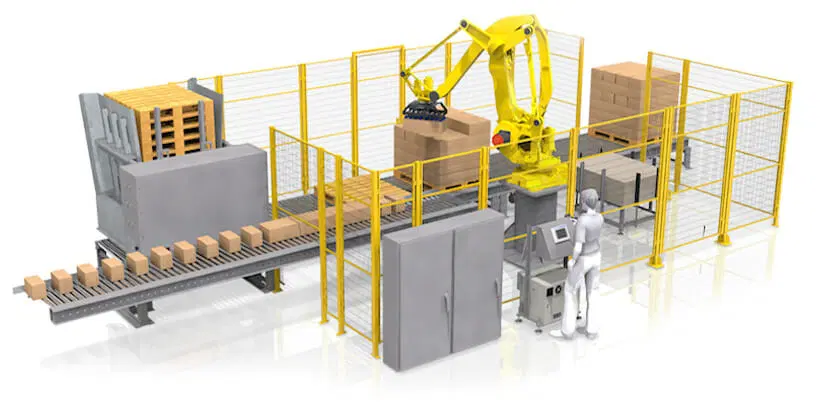
What is palletizing? 

Palletizing makes inventory management easier and more organized by efficiently stacking and securing goods on pallets. This method streamlines storage, retrieval, and tracking processes in a warehouse. Properly palletized goods enhance space utilization, simplify inventory tracking, speed up retrieval, reduce product damage, and improve overall organization, significantly boosting warehouse operations and management efficiency. 

Let us delve into the five essential ways how properly palletized goods make inventory management easier and more organized:

Efficient space utilization

Proper palletizing allows for vertical stacking, maximizing the use of available storage space. This efficient space utilization means more products can be stored in the same area, reducing the need for additional warehouse space and making the warehouse more organized.

Simplified inventory tracking

Palletized goods can be easily labeled and scanned, simplifying inventory tracking. Each pallet can have a unique identifier, allowing for quick and accurate data entry into inventory management systems. This streamlines the process of locating and counting products, enhancing overall inventory accuracy.

Faster retrieval

Palletizing facilitates quicker retrieval of goods. Pallets can be easily moved using forklifts and pallet jacks, speeding up the process of picking and packing orders. This reduces the time employees spend searching for products, improving efficiency and productivity.

Reduced damage

Properly palletized goods are more stable and secure, reducing the risk of damage during storage and transportation. This stability ensures that products remain in good condition, minimizing losses due to damage and making inventory management more reliable.

Improved organization

Palletizing helps maintain a tidy and organized warehouse. Goods are stacked in designated areas, making it easier to maintain order and cleanliness. This organization reduces clutter and makes it easier to implement and follow warehouse safety protocols.

The conclusion 

These benefits make palletizing an essential practice for any warehouse aiming to improve efficiency and operational excellence. Embrace proper palletizing techniques to optimize your inventory management and streamline your warehouse operations. 


read more