


Key Takeaways
- Standard cleaning methods allow fine dust to circulate instead of removing it completely.
- Industrial facilities require specialised equipment and technical procedures to reach hidden contamination.
- Professional dust removal supports safety compliance and protects sensitive machinery.
Introduction
Facilities managers often assume routine housekeeping will control airborne contaminants, yet industrial dust removal requires far more than surface cleaning. In many factories and processing environments, dust collects in ventilation systems, overhead structures, and sensitive equipment that routine sweeping cannot reach. As operations expand and machinery runs continuously, these hidden deposits gradually affect air quality, worker safety, and equipment performance. Standard cleaning teams handle visible debris effectively, but industrial dust behaves differently from everyday workplace dust. The following five realities explain why facilities increasingly rely on specialised industrial duct cleaning services and professional dust removal to maintain safe and compliant environments.
1. Re-entrainment of Fine Particulates
Fine particulate dust behaves differently from visible debris on factory floors. When standard sweeping or basic vacuuming occurs, the smallest particles often become airborne again rather than leaving the environment entirely. This process, known as re-entrainment, allows contaminants to circulate repeatedly through ventilation systems and production areas.
Professional dust removal approaches this problem with specialised extraction systems designed to contain dust during removal. High-efficiency filtration captures microscopic particles before they return to the air. Controlled pressure environments also prevent particles from spreading into adjacent spaces during cleaning.
This difference becomes particularly important in facilities where airborne contaminants affect production quality or employee exposure. Without proper containment, repeated housekeeping cycles can gradually worsen air quality rather than improve it.
2. Lack of Specialised High-Reach Equipment
Industrial environments contain numerous areas that standard cleaning equipment cannot access safely. Overhead beams, ventilation ducts, pipe networks, and suspended cable trays often sit several metres above the floor. These spaces collect significant dust accumulation over time because daily cleaning routines rarely reach them.
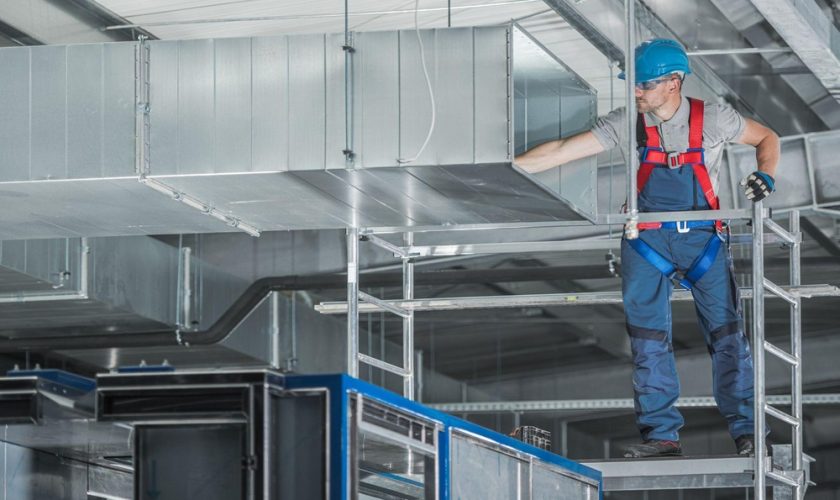
Industrial duct cleaning services rely on specialised tools designed for high structures and confined pathways. Telescopic vacuum systems, robotic inspection equipment, and elevated access platforms allow technicians to reach areas far above standard working height. These systems also allow controlled extraction without disturbing surrounding equipment.
Without the right equipment, dust deposits remain untouched for long periods. Eventually, airflow changes or vibration from machinery can release these accumulations back into the workspace, creating renewed contamination that routine cleaning never addressed.
3. Inability to Sanitise Hidden Duct Internals
Many facilities focus on visible cleanliness while overlooking internal ventilation systems. Air ducts continuously transport particles through production areas, yet their interior surfaces often remain untreated for years. Over time, these surfaces collect layers of industrial dust mixed with chemical residues, moisture, or biological contaminants.
Housekeeping teams rarely have the tools required to navigate complex duct layouts. Turns, narrow sections, and sealed compartments prevent ordinary equipment from reaching the interior surfaces where contamination builds. As airflow moves through the system, particles gradually redistribute throughout the building.
Specialised industrial duct cleaning services inspect these internal pathways and remove accumulated debris using controlled extraction tools. This approach restores proper airflow and reduces the circulation of contaminants that ordinary surface cleaning cannot address.
4. Risk of Damage to Complex Machinery
Industrial production areas contain delicate systems alongside heavy machinery. Sensors, electrical panels, automated conveyors, and monitoring equipment operate continuously and require careful handling during cleaning procedures. Standard cleaning routines may unintentionally disturb these components while removing surrounding dust.
Professional dust removal teams understand how airborne particles interact with sensitive equipment. Technicians receive training on working around electrical infrastructure, automated production lines, and monitoring instruments. They apply cleaning techniques that avoid moisture exposure or mechanical interference with critical systems.
This careful approach reduces the risk of accidental disruptions during maintenance. In facilities where machinery operates with tight tolerances, even minor contamination or disturbance can affect calibration, productivity, or operational safety.
5. Failure to Meet Regulatory Reporting Standards
Industrial facilities increasingly operate under strict documentation requirements related to safety, environmental monitoring, and quality assurance. Auditors frequently require evidence that contamination control measures meet regulatory standards and internal compliance frameworks.
Routine cleaning services rarely provide detailed verification of dust removal effectiveness. Without measurable documentation, facilities may struggle to demonstrate that maintenance procedures support their certification requirements. This gap becomes particularly important during audits for workplace safety or environmental management systems.
Professional dust removal providers typically produce structured documentation that supports regulatory reporting. Inspection records, particulate measurements, and visual verification help facilities confirm that contamination levels remain within acceptable limits. This level of documentation supports ongoing compliance while providing facility managers with clear insight into environmental conditions.
Conclusion
Industrial dust behaves differently from everyday workplace debris, which explains why routine housekeeping cannot address every contamination risk inside a complex facility. Over time, hidden dust accumulation within ducts, overhead structures, and machinery environments can influence air quality, operational reliability, and safety standards. Specialised industrial duct cleaning services focus on these hidden areas and apply professional dust removal techniques designed for controlled containment and accurate documentation. Facilities that recognise this difference gain clearer oversight of contamination risks and maintain more stable operating conditions across their production environments.
Contact BELFOR to schedule an industrial hygiene audit and explore how professional dust removal can support safer facility operations.